


The story behind the app
Building JR TV: From curiosity to a media product
The questions that became a product, and the editorial choices behind an app for finding useful signals, sharing perspective, and putting ideas to work.
JR TV began with a pattern I kept noticing. People wanted help understanding which developments in AI deserved their attention, and how to put them to work. The questions came from executives, product builders, and people trying to bring new ideas into their organizations. They were looking for a useful point of view.
I understood the need because keeping up is part of my own practice. I follow new tools, try things, connect ideas, and keep asking what becomes possible next. Over time, people began asking for more of that process: the OpenClaw or Hermes setup, the skills I use, the functions I run, and the choices behind the results.
Sharing a setup gets someone started. Helping them get value from it takes more context. That is the part I wanted to make easier to share, and the reason I built JR TV.
An interesting demo needs a point of view
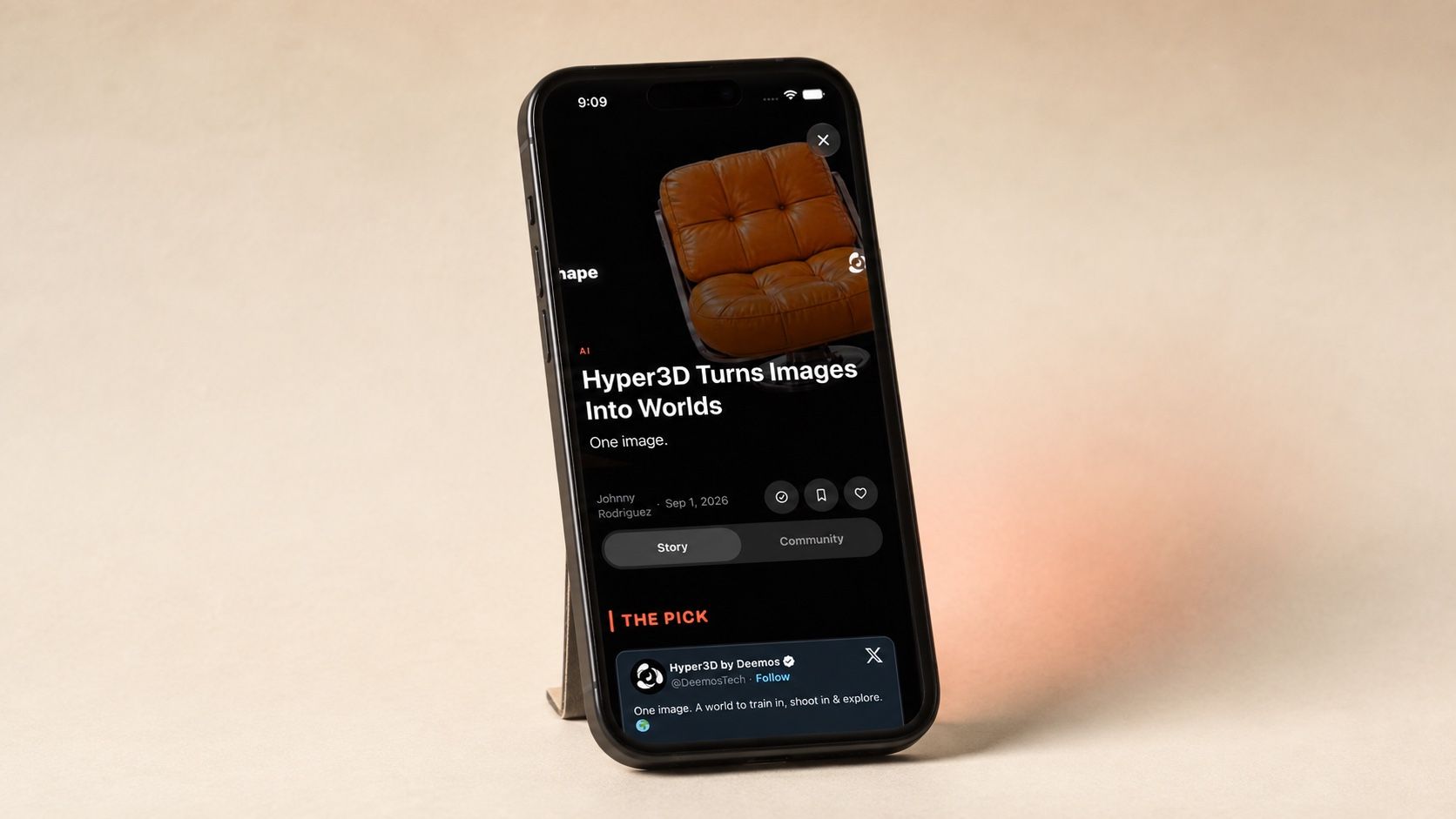
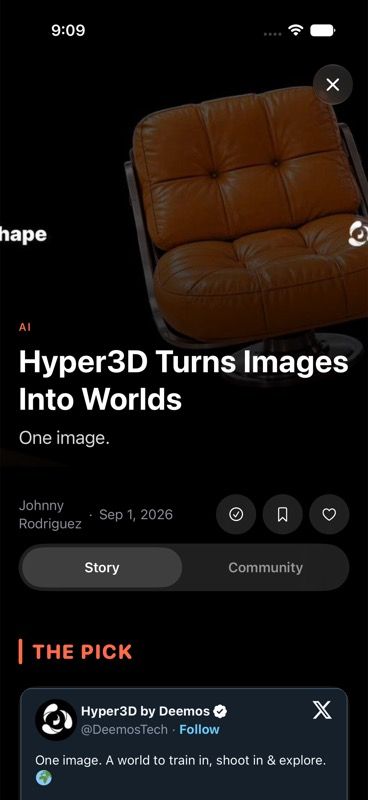
Take “Hyper3D Turns Images Into Worlds.” The source demonstration describes turning a single image into a scene with separate foreground meshes and a Gaussian-splat background. That combination caught my attention because it suggests a different relationship between an image and the space we can explore inside it.
The useful question is what someone could do with that space: explore a scene, work with its objects, or use it as a starting point for a spatial experience. The Pick preserves the original source, then adds my recorded perspective and a written explanation of why it matters. Readers can see where the demonstration ends and my interpretation begins.
This is the kind of discovery I want JR TV to surface. Something changes, I explain what caught my attention, and the reader gets enough context to decide whether it deserves a closer look. Featuring a tool should serve that understanding. An impressive demo still needs testing before I can make a first-person claim about what it delivers.
Show the thinking behind the link
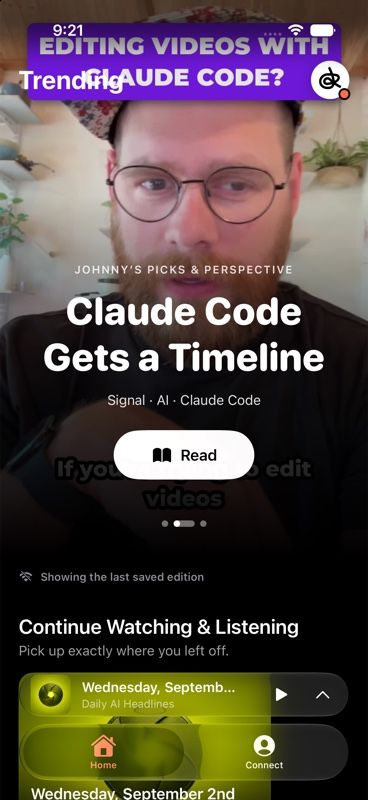
“Claude Code Gets a Timeline” makes the distinction practical. An external creator demonstrated an agent-assisted video-editing workflow using assets and timestamped feedback. I connected it to a frustration from my own experience with Captions: predefined styles can become a constraint when you have a particular edit in mind.
What interested me was the shape of a more flexible process. Gather the footage and other assets in a folder. Work with an agent on an edit. Review the result, give feedback at specific moments, and refine it. The source showed the possibility; my perspective explained the creative problem it might help solve.
That extra layer is the product. A Pick brings together the source, my take, and the reason to care. Recording a voice note lets me capture the thought while it is fresh. A transcript gives someone another way into the same idea. A deeper Field Note can follow when I have an actual experiment, a decision, and a lesson worth sharing.
Let people choose how they spend their attention
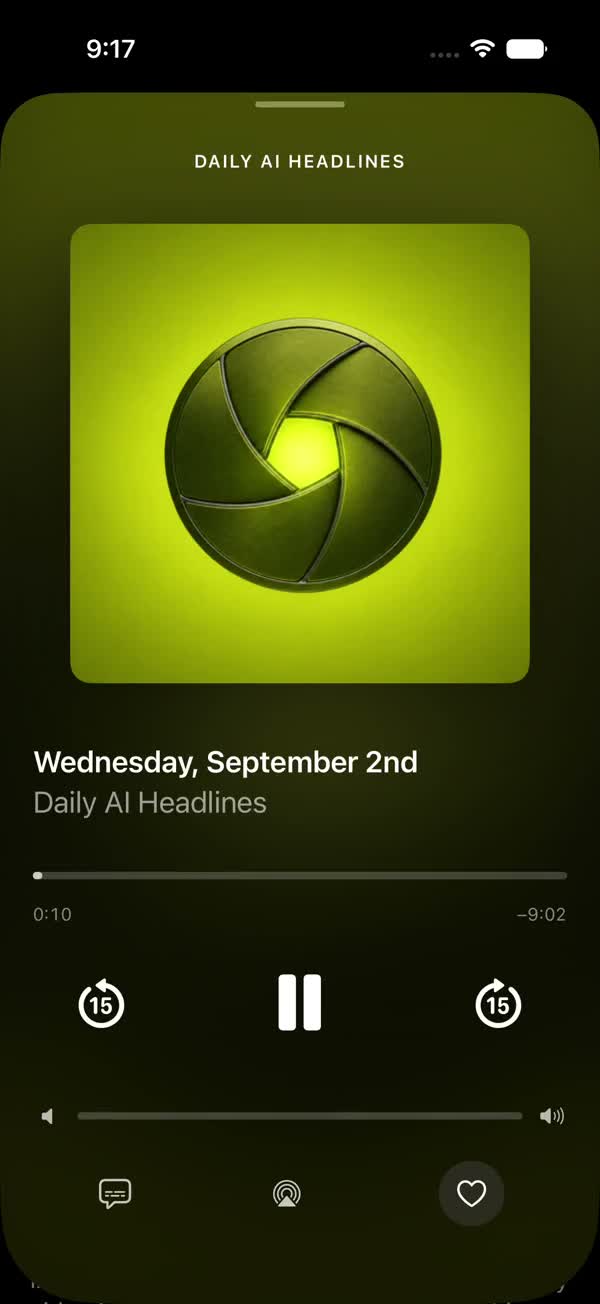
The app gives these ideas a place to live beyond a passing post. The homepage uses large, swipeable covers. A story opens into a focused reader. Daily AI Headlines pairs a written edition with audio, so someone can choose how to take it in.
The small transitions matter. Start an edition and a compact player appears; expand it for playback controls, or open the synchronized transcript. Saved items and progress make it easier to return when an idea becomes relevant to a project. Those details turn a collection of content into an experience someone can use throughout their day.
Community stays attached to the story. That gives questions and responses a shared context: the specific idea people just read or heard. The capture below shows the current signed-out invitation and an empty conversation. The capability is there; a useful community is something people will build through participation.
Taste is part of the product
I want JR TV to feel considered. In the Daily AI Headlines rail, the artwork moves at a different pace from the cards while the titles and controls stay anchored. That small layer of depth makes browsing feel more tactile. It is a choice about how the product should feel, as much as how it should work.
Accuracy earns trust. Care in the experience helps people feel it. I think there is room for beauty, personality, and a little flair in a useful product. Taste matters, and the details are where it becomes visible.
Make the editorial decision visible
One of the most useful lessons came from operating the app. As I collected Picks, drafts began appearing alongside published material in my working view. I found myself having to work out which version of the experience I was looking at as the owner.
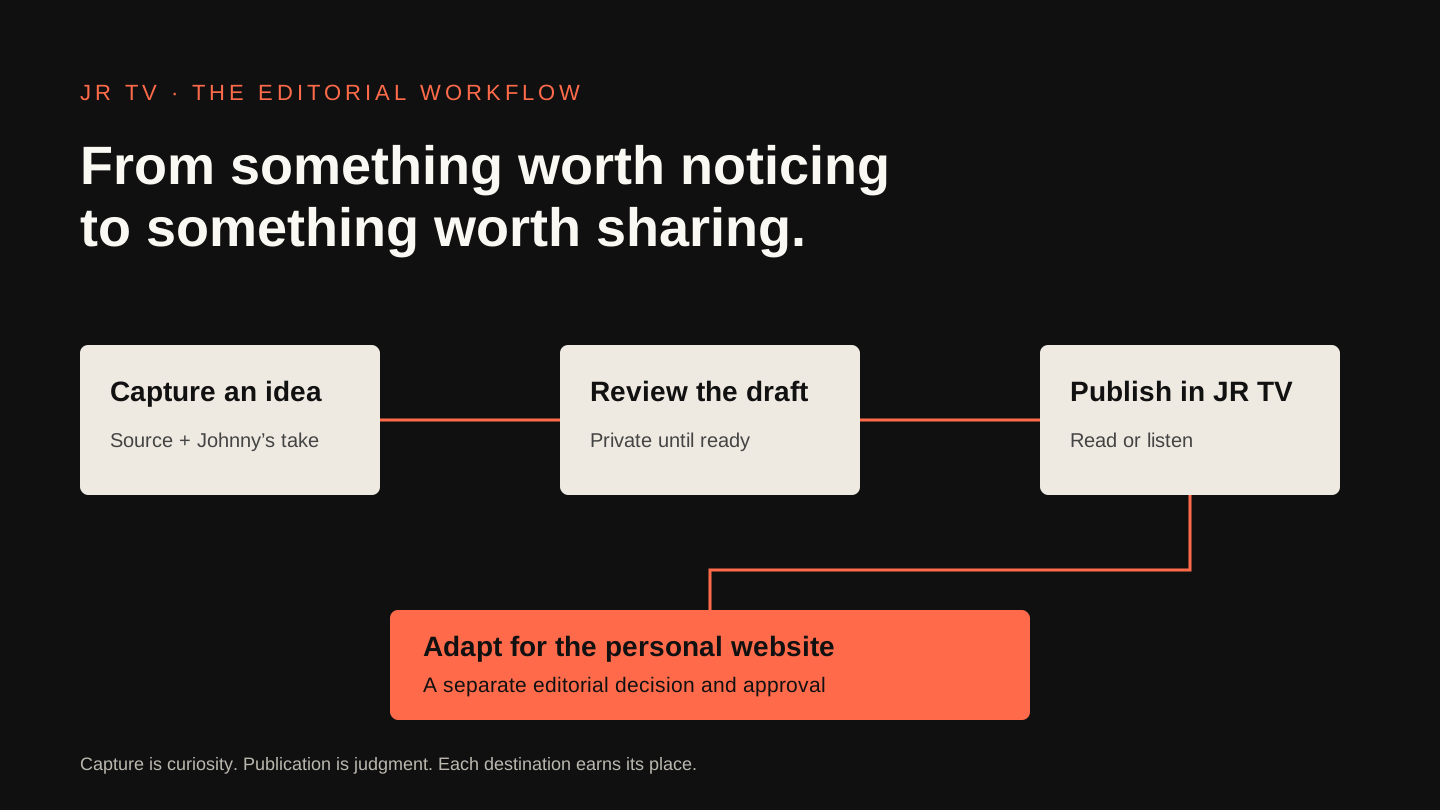
I asked for a separate draft entry point with a count. It opens a dedicated review queue and disappears when the queue is empty. That small change gave collection and publication their own places in the process.
The same thinking guides the website connection. A JR TV item can become a candidate for the personal site, receive an adaptation, and come to me for approval. A changed source needs another review. Publishing something in the app is one editorial decision; featuring it on JohnnyRodriguez.com is another.
Give the work more reach
Daily AI Headlines already has a production rhythm for researched audio and a written edition. Picks begin with things I encounter and the context I add. The website can draw from that work through a weekly review of the strongest connections to my existing Field Notes, practical experiments, or a new story.
That is how I want the brand to fit together. JohnnyRodriguez.com is the home for my work and the judgment behind it. JR TV is a media product under that umbrella, with its own identity and a reason to return. Next Inflection is developing as a JR TV original: conversations, demonstrations, and experiments that can also have a prominent place on the personal site.
There is more to build. Next Inflection and the broader lab and proof collections still need their real editorial catalogs. The website currently introduces JR TV; web consumption and shared sign-in are later phases. The working app is evidence of the product and publishing process. Its effect on people's work is something I still need to learn from use.
A product I can point to
Proof over prediction is a standard I want my work to meet more often. I will keep exploring what might happen next. I also want to show the experience, the experiment, the decision, and the adjustment that followed.
JR TV makes that intention tangible. It began with questions people already brought me, and it is becoming a way to answer them with more context and more reach. Building it has also given me a fresh set of lessons to share: about attention, editorial judgment, and the details that make a useful workflow easier to repeat.